

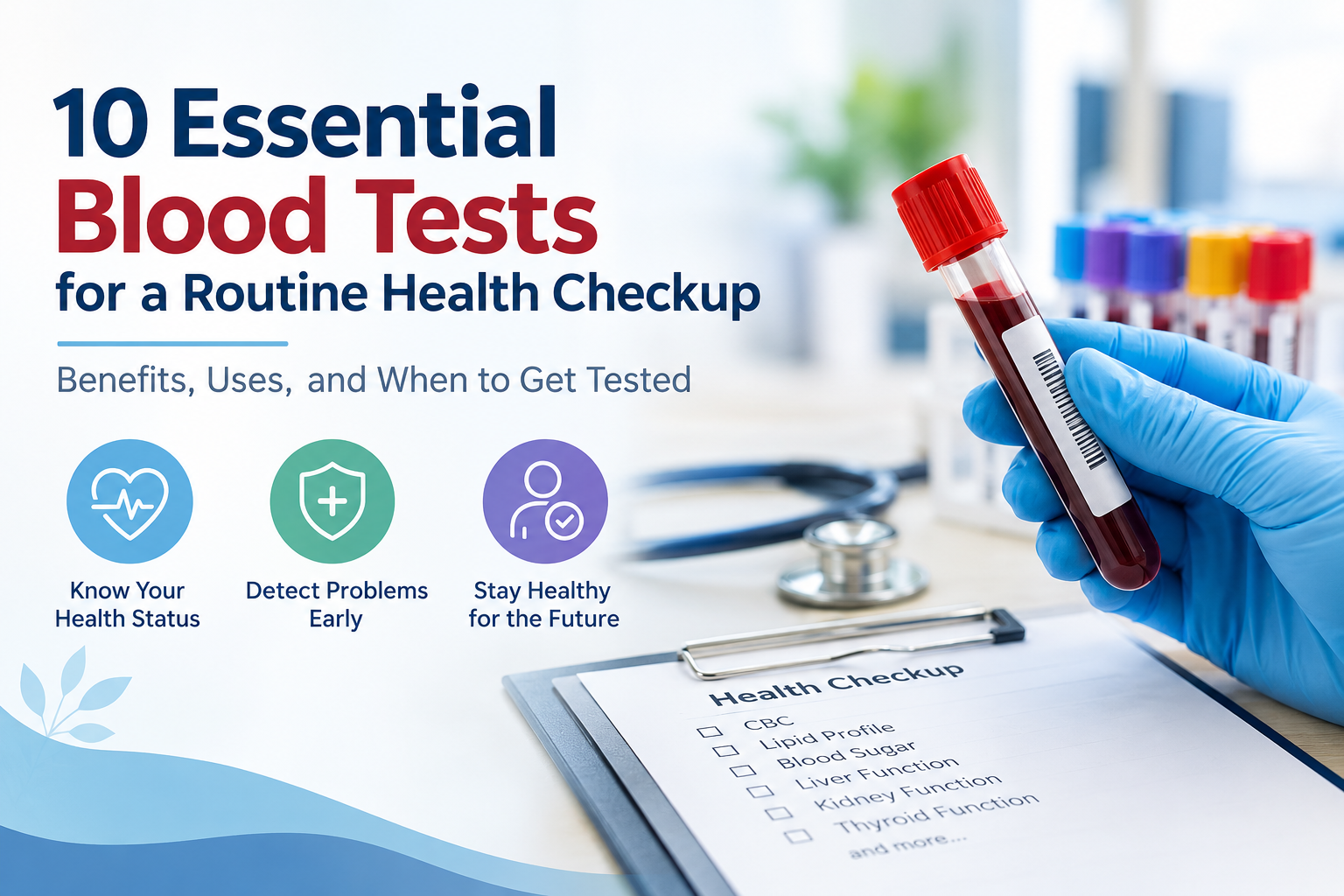
Good health is not only about being healthy but also knowing what goes on in your body. The most effective blood tests for a routine health checkup screening test will be the ones that evaluate essential elements of good health, such as blood cell counts, blood sugar, cholesterol levels, kidney function, and nutritional levels. They can aid in preventive health screening.
Suitable tests can be accessed at Central Diagnostics depending on your health needs, age, and medical background. A good choice of blood routine test can be used to check on the health conditions being treated and if the treatments are working. Need assistance in selecting suitable tests? Reach out to our diagnostic experts and get assistance with the process.
What Is a Routine Blood Test?
A routine blood test involves taking various tests on your blood sample. This will be done after the doctor reviews the results of your blood sample along with your signs and symptoms, history, medications, and lifestyle. Routine tests can involve testing your blood glucose level, cholesterol, how well your organs are functioning, and deficiency of nutrients.
It is recommended that if you are going to have a blood test in Dwarka, consult with your physician about your concerns and existing diseases to choose a proper set of blood tests. A negative test result at Central Diagnostics does not rule out all diseases; additional tests may be recommended if necessary for further evaluation.
Take care of your health testing properly—learn what tests you require and the time and fasting before taking the sample.
10 Essential Blood Tests for a Routine Health Checkup and What They Measure
The blood tests for a routine health checkup allow us to assess general health status. What tests need to be conducted must be based on individual medical needs and not a set list.
These tests could be recommended by a health professional to be done as part of your regular blood test based on your age, symptoms, risk factors, and previous test results.
Also Read: When Is Fetal Echocardiography Recommended During Pregnancy, and What Does It Check?
1. Complete Blood Count (CBC)
CBC counts different blood cells, and it may reveal anemia, infection, and platelet disorder. It may be part of a blood routine test when there are signs that the CBC test should be performed on the patient.
2. Blood Glucose Test
The test is used to measure your blood sugar levels at present. This test may be recommended as a means of testing for diabetes, particularly if you have certain risk factors, such as being overweight.
3. HbA1c Test
The HbA1c reflects the average blood sugar concentration for about two to three months. It is useful to the doctor to determine how well a patient controls his/her blood sugar in the long term.
4. Lipid Profile
Lipid panel tests are used for measuring the levels of cholesterol and triglycerides. Such information is useful in assessing heart disease risks, together with blood pressure, smoking, age, etc.
5. Liver Function Test (LFT)
Liver function tests look at indicators that may indicate liver problems. These are ordered by doctors if symptoms are being investigated or certain medications or diseases are being monitored.
6. Kidney Function Test (KFT)
KFT normally involves creatinine along with other markers of kidney function. Under different circumstances, doctors may also recommend the estimation of filtration rates and urine tests.
7. Thyroid Function Test
Tests for thyroid include the TSH test and may also include free T4 tests as necessary. The following test will aid in detecting any strange changes in body weight, fatigue, or response to cold or heat.
8. Vitamin B12 Test
The vitamin B12 test can be carried out in case one has anemia, numbness, or tingling sensations. The findings are used to determine further testing or supplementation.
9. Vitamin D Test
A vitamin D test can be performed if there are any associated symptoms or if there is any risk of vitamin D deficiency. It is not necessary for all healthy adults.
10. Iron Studies
Iron tests consist of the ferritin test, among others. These tests will be used to detect the cause of anemia or iron deficiency if it is believed necessary by the physician.
Do you want to take up testing? Just approach a diagnostic company and inquire about different types of tests or health screening packages available. In case you are confused, a diagnostic centre in Dwarka could be one of your options.
Do You Need to Fast Before a Blood Test?
Fasting at Central Diagnostics depends on the test being conducted. There are some blood tests that will require fasting, but normal tests such as CBC and HbA1c do not require fasting prior to sample collection.
Follow your doctor’s or lab’s instructions before undergoing blood tests for a routine health checkup. Do not stop taking any prescribed medication without your doctor’s consent.
Why a Doctor’s Guidance Matters When Choosing Tests
Not every person needs every investigation. A suitable routine blood test list should reflect individual health requirements rather than a standard package alone.
Doctors may consider:
- Age, medical background, and present status
- Signs such as exhaustion and unexpected changes in weight
- Affect the body’s response to stimuli
- Previous success and the need for follow-ups
The health tests performed at Central Diagnostics allow patients to make wise decisions regarding their health. Blood tests may reveal symptoms of diseases early on, and some test results may require further testing.
The use of a common blood tests may be useful, but it cannot substitute for a physical examination where there are ongoing symptoms. Moreover, blood tests may help many people but not everybody.
Conclusion
Selecting the most suitable types of blood tests for a routine health checkup during an exam helps monitor various health parameters, investigate certain symptoms, and identify possible problems. There are different types of blood tests, such as the CBC test, glucose test, thyroid test, and many more.
When doing health checkups, go for tests that suit you rather than ordering all kinds of tests. Tests like blood tests for early disease detection can be quite helpful when done correctly, while common blood tests should always be analyzed in relation to your general well-being.
Central Diagnostics encourages people to get professional guidance, understand their findings, and arrange for the right tests. Proper thinking regarding tests will help you make proper health decisions. Take control of your health now. Consult our experienced team for help interpreting your tests, getting professional guidance, and selecting the appropriate tests with ease. Contact us or book your test today.