
Blood Test in Dwarka
Blood Test in Dwarka for Accurate & Reliable Health Screening
Good health depends on more than treating problems after they appear. Regular testing can help people understand important changes inside the body and discuss them with a doctor at the right time. A blood test is one of the most commonly recommended diagnostic investigations because it can provide useful information about blood cells, glucose, cholesterol, thyroid function, liver health, kidney function, and other blood parameters. If you are looking for a blood test in Dwarka, choosing a reliable diagnostic facility can make the testing process easier and more organized. Central Diagnostics provides laboratory services with attention to Blood sample collection, Laboratory testing, Sample processing, and reporting.
Importance of Regular Blood Testing
Blood carries information about several processes taking place in the body. Changes in its composition may sometimes indicate nutritional deficiencies, infections, metabolic concerns, or other health conditions. This makes Diagnostic blood tests useful for both routine monitoring and clinical evaluation.
A Routine blood test may be recommended during a regular blood test in Dwarka or when a person experiences symptoms such as tiredness, weakness, unexplained weight changes, frequent thirst, or recurring illness. However, the specific tests required depend on individual health needs and should be selected with appropriate medical guidance.
Regular testing can also support Preventive health screening. Instead of waiting for noticeable symptoms, people can use suitable investigations to monitor their health and identify changes that may require professional attention.
Blood Test Centre in Dwarka for Diagnostic Needs
When selecting a blood test centre in Dwarka, patients should consider factors such as testing facilities, sample handling, reporting procedures, hygiene, accessibility, and professional support. A dependable Diagnostic Centre should maintain a systematic process from registration through reporting.
At Central Diagnostics, patients can ask about the recommended test, preparation requirements, Blood sample collection, and expected reporting process. Proper identification and handling of every Blood Sample are important because the quality of the sample can influence laboratory results.
For a blood test in Dwarka, the required investigation may range from a single test to several investigations recommended as part of a broader health assessment.
Common Blood Tests and Their Uses
Different blood tests provide different types of information. A Complete blood test may involve several investigations depending on the patient’s requirements. Some commonly requested tests include:
Complete Blood Count (CBC): This test evaluates different blood cell components, including red blood cells, white blood cells, and platelets. It can provide useful information when assessing anemia, infection, or other blood-related changes.
Blood Glucose Test: This measures blood glucose levels and may be recommended for diabetes screening, monitoring, or evaluation of symptoms associated with altered blood sugar.
Lipid Profile: This evaluates cholesterol and other lipid measurements. It is commonly used when assessing cardiovascular risk along with other clinical factors.
Liver Function Test (LFT): This group of tests evaluates selected biochemical markers associated with liver function and can support medical evaluation when liver-related concerns are suspected.
Kidney Function Test (KFT): These investigations measure selected markers that help doctors assess kidney function.
Thyroid Function Test: Thyroid-related investigations can help evaluate thyroid hormone levels when symptoms or clinical findings suggest a possible thyroid disorder.
HbA1c Test: This provides information about average blood glucose levels over a period of time and is commonly used in diabetes assessment and monitoring.
The appropriate combination depends on the person’s symptoms, age, medical history, medicines, and doctor’s recommendations.
Blood Sample Collection and Laboratory Testing
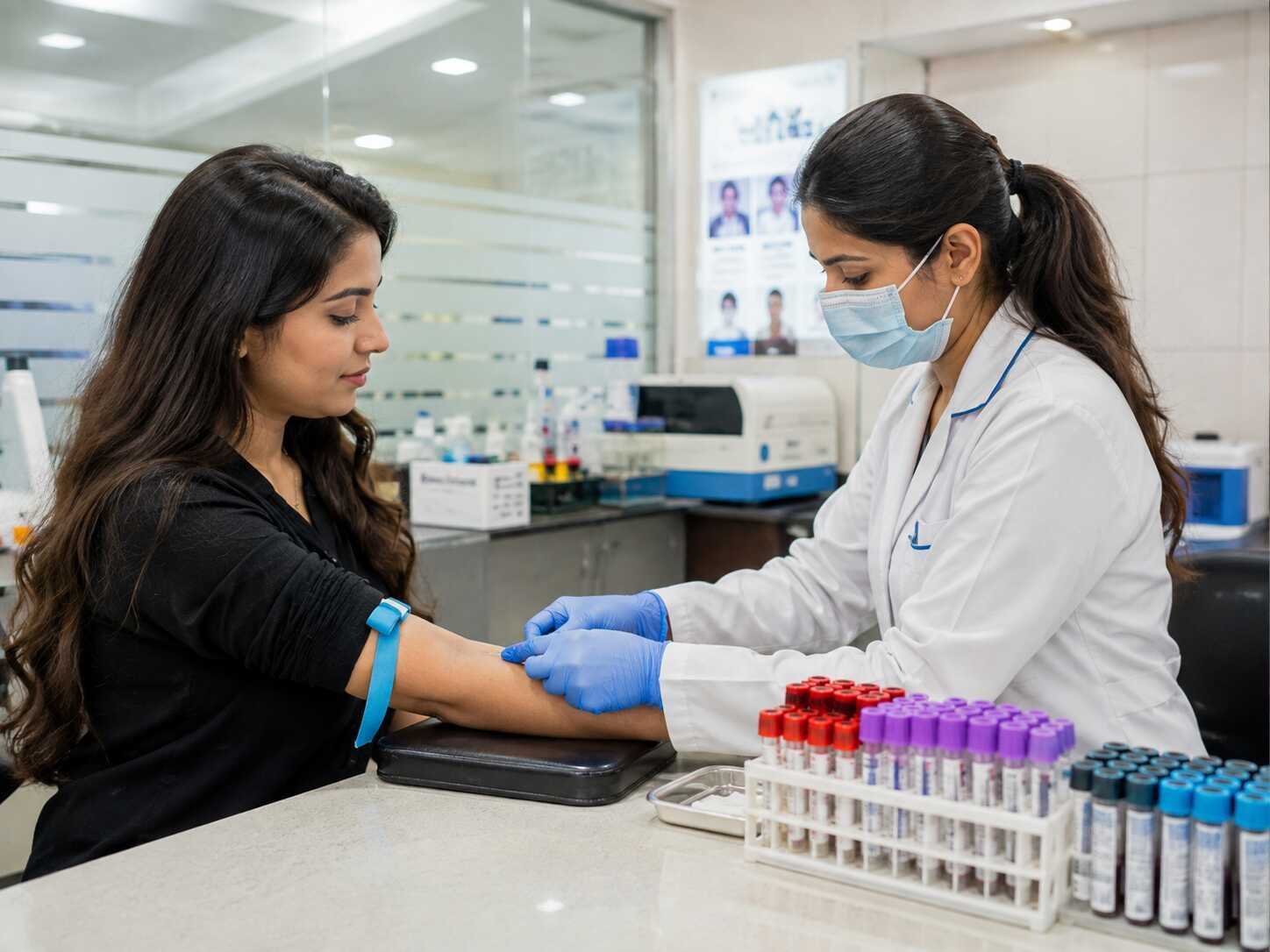
The testing process generally begins with patient registration and confirmation of the prescribed investigations. A trained professional then performs Blood sample collection using appropriate equipment and containers.
The sample is labelled correctly before being sent for Sample processing. In a Clinical laboratory, the required Laboratory testing is performed according to the selected investigation. Once the testing process is complete, the findings are compiled into a Diagnostic report.
Accurate test results depend on several factors, including appropriate patient preparation, correct collection, suitable handling, testing procedures, and reporting. Patients should follow the instructions given before testing and inform the healthcare professional about relevant medicines or supplements when required.
Understanding Test Preparation
Some investigations require specific Test preparation. A Fasting blood test, for example, may require the patient to avoid food for a specified period before sample collection. However, not every blood test requires fasting.
Patients should not assume that fasting is necessary for every investigation. The preparation depends on the test being performed. Following the instructions provided by the doctor or diagnostic facility helps reduce avoidable errors and ensures that the test is performed under appropriate conditions.
Water intake, medication schedules, exercise, and food restrictions can vary depending on the investigation. Therefore, patients should clarify preparation requirements before arriving for testing.
Blood Test Packages and Health Screening
People often choose Blood test packages when several investigations are required together. A package may combine commonly requested tests for general health assessment. However, the usefulness of a package depends on whether the included investigations are appropriate for the individual.
Preventive healthcare should focus on relevant testing rather than simply increasing the number of investigations. A doctor can help determine which tests are suitable according to age, medical history, lifestyle, symptoms, and known risk factors.
Affordable blood testing can make regular health monitoring more accessible, but cost should not be the only factor when selecting a laboratory. Patients should also consider testing practices, report clarity, collection standards, and service convenience.
Home Blood Sample Collection for Convenience
Home blood sample collection can be useful for senior citizens, people with limited mobility, busy professionals, or families requiring multiple tests. Instead of visiting a facility, patients may schedule sample collection at home where the service is available.
The same principles of patient identification, sample collection, labelling, and transportation remain important. Patients should confirm appointment availability, preparation requirements, collection charges, and reporting timelines before scheduling the service.
Blood Testing and Preventive Healthcare
Blood testing can play a big role in Preventive healthcare, but only when it’s used appropriately. If someone gets it done on a regular basis, doctors may be able to notice small changes that later need more evaluation. It can also help keep an eye on already-existing health conditions, and see how the body seems to respond to treatment over time.
For instance, checking blood sugar might matter a lot for people managing diabetes, while cholesterol measurements can help with cardiovascular risk assessment. Hemoglobin levels may be looked at when anemia is suspected. Still, these findings really should not be treated as the only thing, by themselves. You know, not in isolation.
In practice, a healthcare professional reviews the blood test report alongside symptoms , medical history, a physical examination, and any other relevant investigations, before reaching a conclusion. That kind of method supports responsible medical diagnosis rather than leaning on one single lab number, even if it looks convincing at first.
When Additional Diagnostic Tests Are Recommended
Blood investigations are sometimes combined with other diagnostic procedures. Depending on the clinical situation, a doctor may recommend imaging or specialized testing. Patients searching for an ultrasound centre in Dwarka may need imaging alongside laboratory investigations when clinically appropriate.
Similarly, pregnancy-related care may involve specialized investigations based on the advice of a qualified obstetrician or genetic specialist. An amniocentesis test in Dwarka is different from routine blood test centre in Dwarka and should only be considered when medically recommended.
This combination of laboratory and diagnostic services can provide doctors with a broader understanding of a patient’s condition.
Choosing the Right Diagnostic Facility
A suitable facility should maintain attention to patient safety, sample identification, testing procedures, and clear reporting. Patients should also have access to information about preparation and the tests being performed.
Central Diagnostics aims to provide an organized diagnostic experience with commonly requested laboratory investigations. The focus should remain on appropriate testing, dependable Sample processing, and clear communication with patients.
For people planning regular health monitoring, a blood test centre in Dwarka can provide convenient access to essential laboratory investigations. Choosing suitable tests with professional guidance can make health screening more meaningful.
Making Blood Testing Part of Regular Health Care
A blood test can give valuable info about the body’s current state , but it really works best when it is used alongside a wider healthcare approach. Regular health evaluation, fitting preventive screening, and quick discussion with a clinician can help people make more informed choices about their well-being.
If you feel you need a blood test in Dwarka, then think about which kind of investigation is suggested, what preparation you need, how the sample is collected , how the results are sent, and what follow up should happen afterward with your healthcare provider. Central Diagnostics can assist patients with routine as well as Advanced diagnostic testing, according to what they actually require.
A trustworthy blood test centre in Dwarka can make ongoing lab work a bit more convenient while still supporting better health monitoring. When the right tests are paired with proper medical guidance, patients can use lab findings more effectively for early disease detection, continuous observation, and better healthcare decisions. Contact us to learn more about suitable blood test services and available diagnostic options.